Is there more that unites us?
Yes, there is, writes Israel Olofinjana - and here are three key theological ideas that reveal God’s purpose of unity in diversity. In this season of fragmentation, it is important how we model this in our churches and contexts
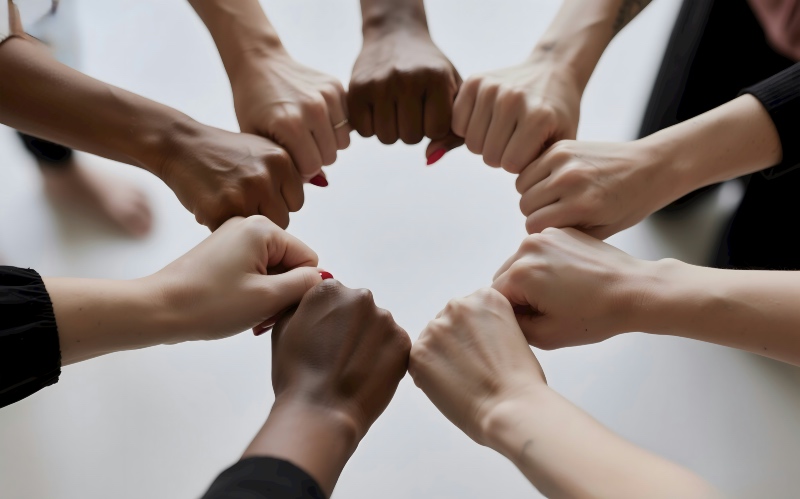
It has been a pleasure to serve the One People Commission (OPC) at the Evangelical Alliance this past five years. As I finish and move on to lead Colchester Baptist Church (a city-centre intercultural church) and alongside catalyse a diasporic and intercultural network for the European Evangelical Alliance (EEA), I have been reflecting on how the landscape of my work around unity, integration and justice has shifted in those five years.
When I started in 2021, we were still living with the realities of the pandemic and the impact of the death of George Floyd was very much felt in church conversations, conferences, talks and gatherings.
Fast forward to where we are now, we are wrestling with discussions on nationalism, Christian nationalism, Unite the Kingdom marches, protests in Northern Ireland, what does it mean to be English, immigration and whether migrants are welcomed in the UK.
In summary, my work at the Evangelical Alliance has been done in the context of the murder of George Floyd in United States catalysing an important question around why black lives should matter, to the murder of Henry Nowak raising key questions on why white lives should matter as well.
Where do we go from here and what are my reflections over these past five years?
In this short farewell article, I want to explore three key theological ideas that has shaped my work at the Evangelical Alliance but also offer them as a way forward in helping us to navigate the contested context that has emerged.
One Humanity
My work at the Evangelical Alliance has always been undergirded by a theological conviction that there is one human race and not races. This was one of the reasons we championed intercultural unity as part of the work of OPC leading to several conversations connecting different national Christian organisations and denominations collaborating together modelling intercultural unity.
This theological conviction is shaped by the theology of creation. This is in the fact that God created one human race.
Creation theology (Imago Dei) furnishes us with the understanding that we are all created in God’s image therefore affirming our equality, human dignity and respect. God created us all meaning we all, whether male or female, white British or refugee, young or old originate from the same source, that is God.
This doctrine also means that we are all equal before God because he created us therefore all lives matter before God whether black, brown or white. This is not to deny the cultural moment of black lives matter because that was an important cultural moment to rectify certain inequalities. The beauty of this creation is that while God created one human race, he also created our distinctiveness. God created man as well as woman, he created English people as well as people from other nations who have migrated to England.
This is the beauty of God’s creation in that while he created one human race in his image, we are not all the same! Creation is therefore a first theological basis for expressing unity and diversity.
In essence, being created by one God in his image means that we are equal, but the fact that that creation is expressed in different physical features, skin pigmentation, biology, history and geography means God also values diversity. This is why God is not colour blind because he created people of colour in the first instance!
God himself expresses this unity and diversity in his very being through what we understand as Trinity. God is three distinctive persons in the Father, the Son and the Holy Spirit, but yet the Godhead is one in essence and purpose.
Incarnation
The second theological framework for our unity in diversity is incarnation. This is the theological idea that God, who created us in his image, decided to share our humanity through his Son therefore becoming human like one of us. John describes this process as “the Word becoming flesh” (paraphrasing John 1:14). The incarnation of Jesus expresses God’s solidarity with humanity in its entire diversity. The doctrine of incarnation could be understood as God’s intercultural language in that God identifies with humanity.
The writer to the Hebrews puts it this way:
In the past God spoke to our ancestors through the prophets at many times and in various ways, but in these last days he has spoken to us by his Son, whom he appointed heir of all things, and through whom also he made the universe. The Son is the radiance of God’s glory and the exact representation of his being, sustaining all things by his powerful word. After he had provided purification for sins, he sat down at the right hand of the Majesty in heaven. (Hebrews 1:1-3, NIV).
God speaks to us through his son means God communicates to us, identifies with us in our weakness and vulnerability therefore giving us a framework for God’s mission in identifying with the oppressed, marginalised and disenfranchised.
My work at the Evangelical Alliance have sought to include justice as an important element in God’s mission, and therefore I have sought to address difficult issues by helping to unmute voices that needs to be heard. Through the lens of intercultural justice, It has identified those whose voices are not heard or perhaps those whose voices are lowered in our conversations. Some of these has been around racial justice, climate justice and on migration.
Therefore, the incarnation has been understood as a theological basis for God’s mission and never separated from justice and unity. That mission again is expressed for all humanity which is why John could say that “For God so loved the world that he gave his son” (paraphrasing John 3:16).
Unity and diversity are an integral part of God’s mission but a further step in understanding the incarnation as a theological basis is that it also speaks to our particularity. That is, the incarnation is contextual in that while Jesus becoming one of us identifies him with the entire human race in its diversity, he nevertheless came to us as a Jewish male born in first century Palestine. This is specific and speaks to the heart of how important it is to recognise the various distinctiveness of our identity, but at the same time the incarnation connects beyond the particular. We have to hold this in tension that God is particular but also connects with us all. In essence, Emmanuel, God with us identifies with those who are suffering and oppressed.
Reconciliation
The last area of reflection is reconciliation and how this also shapes the work of OPC and very important in the current context of division and polarisation. My work at the Evangelical Alliance has sought to bring healing and reconciliation through addressing wounds that have never been healed.
The championing of the intercultural church conversation to help local churches do integration well has been part of this process. Through the intercultural church and the different resources produced, we have seen individuals reconciled, communities reconciled and churches healing through addressing safely and honestly issues of conflict.
Reconciliation takes forward the ideas in creation and incarnation in that while Jesus was revealed to us in the incarnation identifying with humanity, his death on the cross achieved reconciliation therefore recreating humanity in a new image of God.
Paul puts it this way:
For he himself is our peace, who has made the two groups one and has destroyed the barrier, the dividing wall of hostility, by setting aside in his flesh the law with its commands and regulations. His purpose was to create in himself one new humanity out of the two, thus making peace, and in one body to reconcile both of them to God through the cross, by which he put to death their hostility. He came and preached peace to you who were far away and peace to those who were near. For through him we both have access to the Father by one Spirit. (Ephesians 2:14-18, NIV).
Here Paul was describing how Jesus’ death on the cross has brought an end to the cultural hostility that was between Jews and Gentiles. The death of Jesus on the cross is undergirded by the understanding for the need for reconciliation between humanity and God, but also between polarised communities. Reconciliation therefore gives us a language of pursing a just integrated society where all humanity is reconciled and flourishing.
The church is the new community modelling this new image of God in Christ which is why Paul in another passage could talk about the body metaphor to illustrate the importance of different parts of the body but how ultimately that they have to function together because if one part hurts then the whole body hurts. “If one member suffers, all suffer together with it; if one member is honoured, all rejoice together with it” (1 Corinthians 12:26 NRSV).
Each member of the body of Christ is important irrespective of our nationality, culture or ethnicity, whether Northern Irish, Asians, Africans or English, we are all important to God. Therefore if some members of the community are suffering through fear, exclusion, injustice or stereotype, we should all feel that pain together as a body just as we should all rejoice together when the gospel advances.
In conclusion, it has been a pleasure to serve at the Evangelical Alliance and while a lot has been accomplished, we still have more work to be done. It is therefore important in this season of fragmentation, that we model God’s creation, incarnation and reconciliation in our churches and contexts to reveal God’s purpose of unity in diversity.
Israel Oluwole Olofinjana is a Baptist minister and director of the One People Commission of the Evangelical Alliance (2021-26)
Image | Kamil Kalkan | Unsplash
06/07/2026