The Revd Eric Blakebrough MBE: 1929-2025
Eric, who died on 4 November 2025, at the age of 96, was the founder and creator of Kaleidoscope, now the biggest drugs charity in Wales and one of the leading postwar influences on a progressive approach to drug addiction policy.
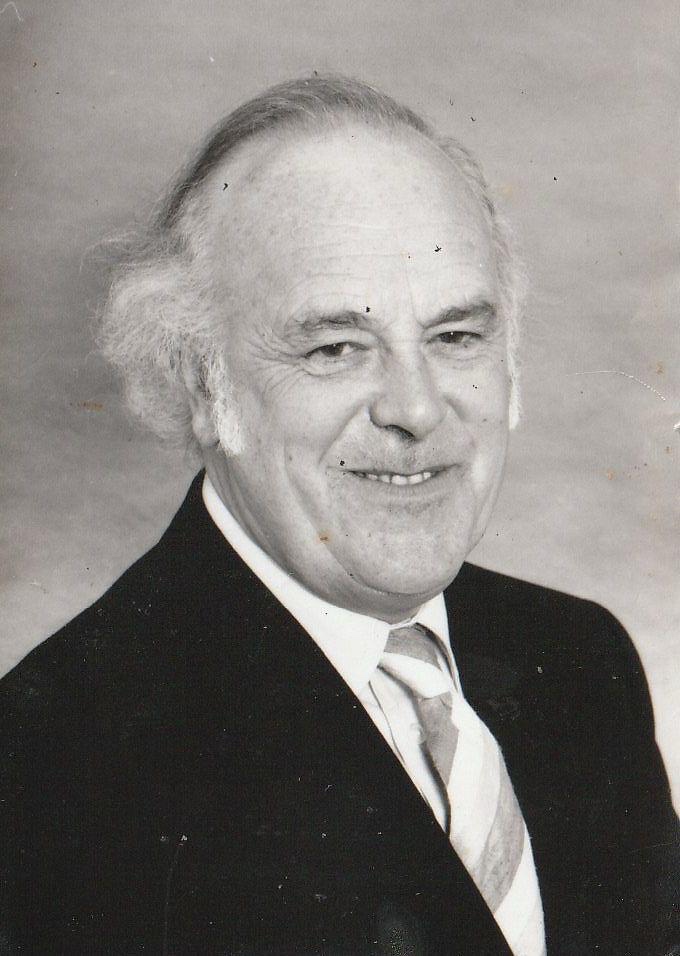 Since Eric created Kaleidoscope in South West London in the 1960s, it has focused on individuals rather than categorisations of problems such as isolation, alcohol, drug addiction, mental unwellness or housing. His strategic ambition was to create a community with, at its heart, his own family who, from the very early days of Kaleidoscope, lived alongside the people they sought to help. His late wife, Mary, herself remarkable as he was greatly helped him to shape Kaleidoscope. She was Kaleidoscope’s embodiment of nurture for those who turned to Kaleidoscope for help, and Eric’s wise counsellor.
Eric’s motivation through his work as a Baptist minister and then founder and leader of Kaleidoscope was to live a life of service. He combined compassion for the individual with practical action, which led to the growth of Kaleidoscope’s pioneering work in needle and syringe exchange and the provision of methadone as a substitute for heroin.
Eric Blakebrough was born in 1929 in the East End of London, the son of an electrician from a Plymouth Brethren background, while his mother, an Irish Catholic, worked at a Lyon’s Corner House. The Second World War had a profound impact on the family. Their home was bombed three times, while Eric, aged 10 at the start of the conflict, was evacuated to the countryside. This meant that he missed out on the early years of his sister Rosemary’s life – she was 10 years younger than him, although they grew close in later life.
Evacuation for Eric was mostly traumatic especially as some rural families were not keen on taking on a tall Cockney boy. This experience of being an outsider was a seminal experience for Eric, helping him empathise with those he met later through his work who had been rejected by mainstream society.
Despite the war’s disruptive impact on his education, Eric excelled in mathematics and science at his grammar school and joined the RAF, where he worked on radar. It was during the time spent in the RAF that Eric came into contact with an evangelical Baptist mission which inspired him to train for ministry in the Baptist church. After buying himself out of an eight year RAF contract he studied at Bristol Baptist College and it was during this time that his met his future wife, Mary Warriner, a student teacher. They shared a belief that Christianity demanded social justice.
The couple moved to Southend, where their children, Justin and Adele, were born, and Eric served as a minister. While he became known for his preaching, his concern was to reach out to young people, beyond the confines of the church, and so opened a club for them, where they could hear contemporary music.
From Southend, Eric returned to the East End to become an industrial chaplain in West Ham, a role that attracted him as it meant he could take Christianity beyond the boundaries of his church. Rather than using his partnership as an opportunity to evangelise, he encouraged dialogue.
Eric’s conviction was that people of faith needed to be people of social justice. This inspired his growing interest in the connection between Christianity and politics but did also lead him growing away from the rhythm of other Baptist ministers. His interest in politics took in world affairs and whilst in Southend he became particularly engaged in the plight of the people of Angola, a country riven by civil war as it strove for independence from Portugal. Eric’s concern for Angola led him to a visit with Labour politicians, including George Thomas and Tony Benn, to report on atrocities there.
Meanwhile Eric was working part-time for John Robinson, the Anglican Bishop of Woolwich and author of an influential book, Honest to God, which argued that God is continually revealed to people through society, not just through church or official religious conviction and worship. Eric remained closely involved with local people in West Ham: he and Mary, who now had a third child, Martin, hosted a club for young people in their own home.
But they would not stay in the East End. As well as working for Bishop Robinson and moving the family out to Essex, Eric became something of a peripatetic preacher, visiting various churches. These included the John Bunyan Baptist Church in Kingston upon Thames where he – and the congregation – were taken aback by its minister who announced that Eric would succeed him.
At first Eric was not keen; he assumed that Kingston was very suburban and did not want to live a conventional, ordinary life. Eventually, in 1968 and with the full support of Mary, he moved his family to Kingston, became pastor of the John Bunyan Baptist Church and won the support of its congregation in making the church’s focus upon reaching younger people.
Eric’s concern for the young people arose in the late 1960s when there was a blossoming of youth counter-cultures. Rather than a quiet suburban town, Kingston and its music venues was a draw for Teds, Mods and Rockers, Hell’s Angels, Road Rats and Hippies. Once the pubs closed, many groups, often in conflict with one another, had nowhere to go and the local papers were full of stories of the problems caused in the town late at night.
Eric thought his church could help and with this in mind, he launched Kaleidoscope, a club on church premises which ran all through the night on Fridays, and where young people could get tea and coffee, soft drinks and food. While the original intention was to give young people in the town somewhere to meet up late at night, Eric and Mary soon became aware that many who attended the club needed advice or at least to talk to people who were prepared to listen. Then there were also substantial practical needs, ranging from issues with drugs to advice on contraception. This led to the setting up of a doctors’ surgery so young people could get confidential medical help.
The Blakebroughs also provided accommodation for young people who had nowhere to go, at first housed in two semi-derelict houses that the John Bunyan Church owned.
By 1977, Eric had raised enough funds to build a new red-brick church, combined with a hostel for young people, with space for communal meals – which also doubled as the Friday night club – and accommodation for live-in staff and volunteers. Given the suspicion that many local residents had of Kaleidoscope, it took six years of council meetings, lobbying and public debate to get permission for the four storey, 35-room hostel and the rest of the new build. Eric, Mary and their three teenage children, Justin, Adele and Martin – who had lived first in a house a few miles from the church, and then the manse, which was sold to raise funds, also made it their home.
While Eric and Mary’s response to young people’s needs was highly practical, it was also rooted in their Christian faith and the call, in both Old and New Testaments, to offer hospitality. In other words, a welcome without judgement.
But if there was any judgement, it was that the Blakebroughs believed that the young people they encountered were not so much rejecting society’s conventions as rejecting the idea that money should be the measure of all things. He wrote years later, in an article for the Catholic weekly, The Tablet: “The challenge to our church was to seek to understand these people, to engage with them, and to help casualties of the drug scene. This would not bring about the Kingdom of God, but it pointed in that direction”.
And in his 1985 book, No Quick Fix, about the work of Kaleidoscope, he wrote: “A local church….must dream dreams”.
Ten years earlier, in 1975, a United Nations sub-group, studying approaches to drug abuse, visited Kaleidoscope to learn from a community approach. Talking about the hostel and the club, Eric told them of the organisation’s desire to offer young people what he called a ‘homecoming’: “where they are sure of acceptance and warmth, where the only condition attached to their welcome is that they are not intent on destroying the place. Homecoming has sacred connotations. We all need acceptance and warmth whatever our failures…Kaleidoscope is such a place”. When the UN report appeared, it gave full endorsement to Kaleidoscope’s approach.
Eric was supported in his venture by members of his church, many of whom became volunteers at Kaleidoscope, as well as young people from elsewhere who also wanted to get involved in such a powerful response from a local church to need in its neighbourhood. Some came of their own accord; others spent summers at Kaleidoscope as part of their undergraduate and graduate studies; some came from abroad through volunteering organisations such as Toc H.
For many of these volunteers and the staff, the work could be daunting, working alongside young people who were often traumatised by their childhood and adolescence. The trauma was sometimes declared through suicide attempts, self-harming and drug and alcohol addiction. There were occasional police raids at the club, and attempts by dealers to sell drugs, although dealing was strictly banned. There were also fights, deaths from overdoses as well as suicides. Many incidents required practical, medical intervention, but key to the Kaleidoscope approach was listening and putting the person first.
For staff living in and for the Blakebrough family living on site, helping everyone to cope with this work meant building into the Kaleidoscope work patterns some breaks from the premises. A system was devised allowing four day breaks every two weeks rather than usual weekends off in order to help people recharge their batteries.
Another novelty of Kaleidoscope was that it was run in such a way that all staff were equal. They were all paid the same, based on Eric’s level of pay as a Baptist minister while decisions were agreed by vote. But this utopia came to an end when the team took an hour to agree where a piano should be situated. After that, Eric asserted his position as director and became the final arbiter in decision-making.
Over the years Kaleidoscope developed more expertise in working with its clients addiction issues. It became clear that people injecting drugs were in danger of contracting blood-borne viruses through sharing needles, so Kaleidoscope became a supplier of clean needles and syringes. And for those users who could not handle total abstinence, Kaleidoscope developed expertise in substitute drugs. Provision of methadone became part of Kaleidoscope’s everyday life.
The main priority, though, was to offer people options and allow them to choose how they wanted to deal with their problems and how their needs should be met. As well as methadone, also on the agenda was detox and sobriety.
When Eric retired from full-time ministry and running Kaleidoscope, he was succeeded by his daughter Adele, who had also trained as a Baptist minister, and then by his younger son Martin, also a Baptist minister. His elder son, Justin, had followed in Mary’s footsteps and become a teacher.
It was Justin who was the first to make a connection with Wales, when he studied at Aberystwyth University. It was after taking him there that Eric and Mary came upon a house in need of repair in mid-Wales. They decided to buy it and restore it, creating a home where they could go for their 4-day breaks and where they could eventually retire. After living there full-time in early retirement, they later moved to another house that they shared with Adele and her husband, Ian Hargreaves, a journalist who had first met the Blakebrough family as a Kaleidoscope volunteer when he had completed his English Literature degree at Queens College, Cambridge. Eric and Mary later moved again, living their last days near Tenby. Mary died in 2022.
Another major change came for Eric and Mary when together they decided to join the Roman Catholic Church. While some who knew them were surprised, others were not, as the couple had made the Eucharist a regular part of Sunday service at the John Bunyan Baptist Church, which was unusual for a low Protestant community. Eric and Mary were always strongly aware of God in the world – what they and other Christians called the Incarnation, made most visible through the life of Christ. They found God in the people around them – and in the Eucharist.
Eric received several awards in recognition of his work, including an MBE, but none were as important as the continuing life of Kaleidoscope. The organisation also expanded into Wales, invited in 2002 to begin a drugs service in Newport. It has since become Kaleidoscope’s operational heart.
Eric’s philosophy and his legacy can be summed up in words that he often spoke to new members of staff and volunteers: “We accept people as they are”, he would say. “And however much we rebel, we all in the end need to come home.”
This philosophy of acceptance extended in quite remarkable ways. In the early 1970s “Muff”, a leading figure in the UK’s Road Rats outlaw motor-cycle club, befriended Kaleidoscope and formed an unlikely partnership with Eric. On the occasion of Mary’s death, Muff wrote to Eric and said:
“We are both glad you are in good health and have people to look out for you, as after all the countless people you have helped over the years, and all the lives you have touched and changed – all for the better. You deserve to take it easy for a bit. For many years now, I have been at peace with myself after many years of inner conflict and I like the person I am now. So thank you for helping to get me into a better place.”
Home for Eric had always looked to mix demanding work with the enjoyment of great music – opera was his first love. Eric and Mary also both loved to travel around Europe in their open-top MG Midget. And Mary was an excellent cook who adapted readily to the family’s vegetarian preferences. Eric never sought to conceal his own love of cakes.
Martin Blakebrough OBE
24/06/2026