Urgency of the harvest – uniting in mission
Are we willing to seize the opportunity, shake off distractions and take advantage of this ‘Kairos moment’ of increased spiritual openness?
That was the challenge shared at the Baptist Assembly by the Revd Leone Martin, regional minister with the Yorkshire Baptist Association, who preached on Luke 10:1-24 during the Sunday morning sermon
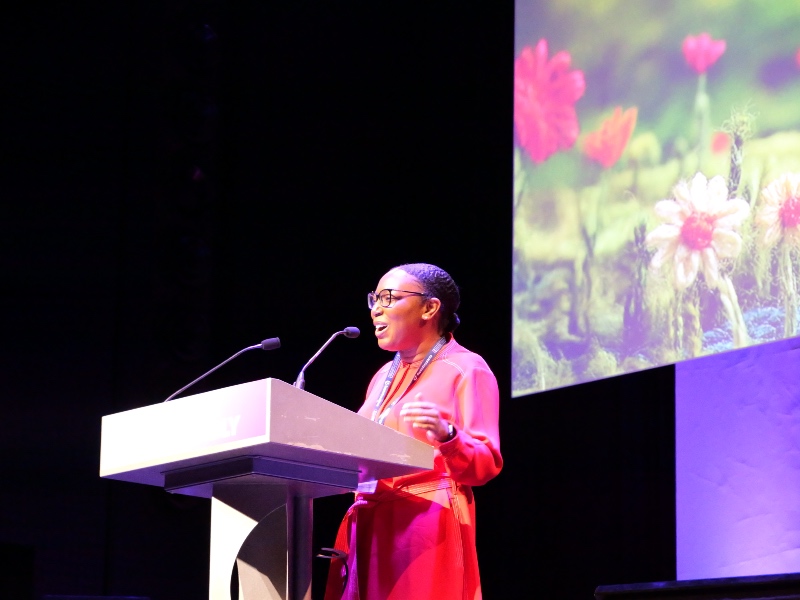
She emphasised while this collective mission demands deep vulnerability, risk, and a humble willingness to both give and receive, churches can step forward confidently because God's perfect strength is fully realised in human weakness.
Jesus’ words in the passage in his sending out of the 72 are still as urgent now as they were 2,000 years ago, Leone told delegates.
‘Today there’s more opportunity than there are workers,’ Leone explaining the UK's spiritual landscape is changing, and that people are coming to faith in all sorts of different ways, including via Tik Tok.
But drawing on Jesus’ metaphor of the harvest, she reminded delegates a harvest represents a strict window of opportunity. ‘When the fruit becomes overripe, it then falls to the ground... It begins to rot. So there's something about a harvest that causes us to understand that if we do not act, we suffer loss.
‘So are we willing to seize the opportunity – take advantage of this Kairos moment?’
Leone admitted she was speaking from a place of ‘weakness, not in strength.’ Is she too distracted and busy to be truly fruitful? Does she operate with the same sense of divine urgency that Jesus demanded of his disciples in this passage? In asking this, Leone challenged delegates with the same question.
‘Are we willing to lay aside the things that continue to grab our attention and threaten to distract us? Are we willing to lay aside the things that are maybe heavy and ill-fitting, the things that may be slowing us down, both individually and collectively?’
For she noted the call to the harvest is given not only to individuals, but ‘in community’. Jesus sent out the 72 ‘not in isolation, but in collaboration’. ‘I believe in this kairos moment, collaboration is what's so deeply needed,’ Leone said.
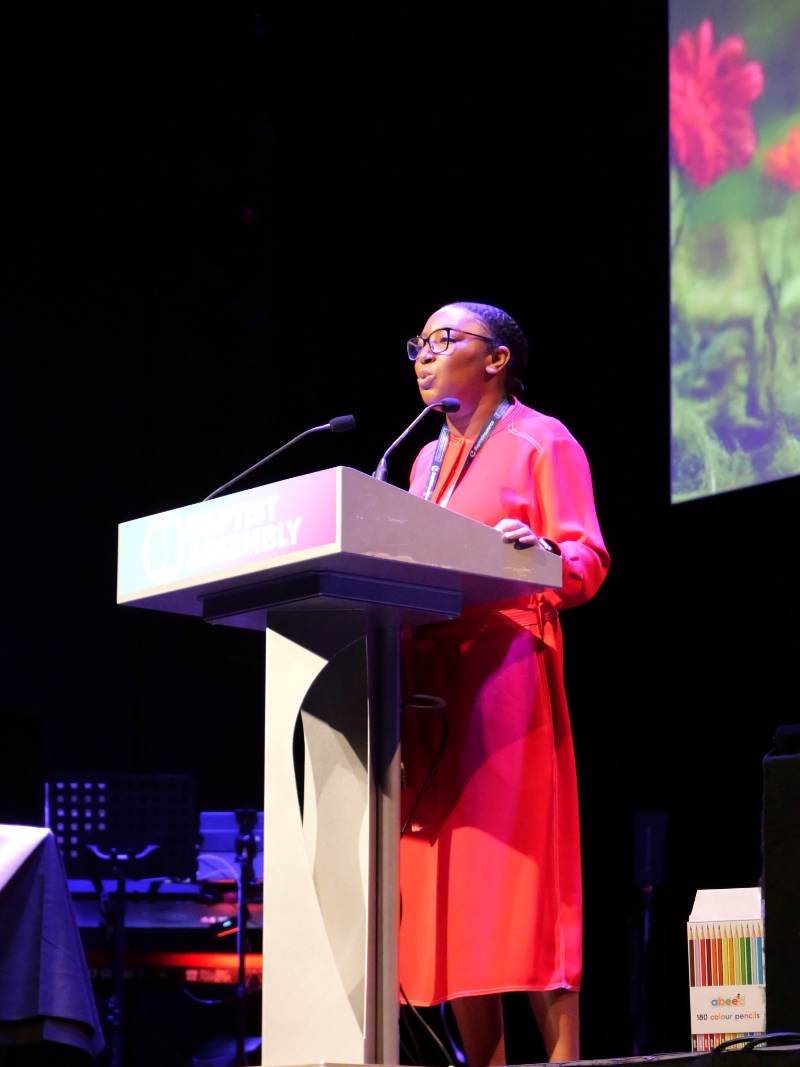 Jesus outlines two ways we are to respond to the opportunity of serving him, Leone continued: a commitment to both pray and go.
‘We cannot do anything that Jesus has called us to do without His divine enablement and intervention,’ she said. ‘When we pray, we partner with God, we receive His wisdom, and we receive the Spirit's empowerment.’
However, she stressed that prayer must immediately translate into action. ‘We can't just stop at prayer, because there's something about going. We are called to pray together, and we are called to go together.’
Reiterating the message of a collaborative community. Leone suggested that the journey of the 72 was a collective learning exercise, showing that some missional lessons simply ‘have to be lived in order to be learned.’
Leone also reflected on the cost of participation, drawing a parallel between Jesus' instructions and a famous, brutal newspaper advertisement attributed to polar explorer Ernest Shackleton. Jesus sent out his followers out without bags, money, or sandals, like ‘lambs amongst wolves.’
This requires a profound level of ‘vulnerability and mutuality’, Leone said. While the disciples were sent out with spiritual power to heal the sick and break down systems of oppression, they were simultaneously sent out in physical need.
‘Empowered, and yet exposed,’ Leone noted, explaining that holistic mission rejects an attitude of superiority or spiritual ‘conquest’; instead, it requires the humility to be a guest, ready to receive hospitality and gifts from the community as well as to impart them.
Leone highlighted the encouraging truth that Jesus deliberately chooses ‘the ordinary, the overlooked, and the powerless’. Contrasting the worldly power that dominates (dunamis) with the delegated authority that liberates (exousia), she reminded the delegates that Christ has uniquely equipped his church to overthrow the power of the enemy.
‘Jesus empowers the powerless to participate in his mission, and that means that we're not disqualified by our background,’ she said.
‘I'm not disqualified because I grew up in inner-city Newtown, Birmingham. We're not disqualified because of our ethnicity or our cultural identity. We're not disqualified because of our education, our ability, our age, or our lack of understanding.
‘Hallelujah, we can all be included!’
While celebrating missional success and numbers is good, Leone closed by redirecting our primary source of joy back to the security of our salvation.
‘True joy and rejoicing is found in the security that we have in the salvation of Jesus Christ, and our true joy is in the fact that we belong to Him,’ she said. 'Recapturing a fresh, personal awe of being snatched out of darkness' means 'it won't be so onerous to go out and do the very thing that He's called me to do.'
Embracing the reality that God's strength is made perfect in human weakness, Leone concluded with a cry of commitment to Jesus. ‘There's a lot of cost to being a disciple, there's a lot of risk, and there's a lot of danger. But when we consider what Jesus Christ has done for us, I just say to myself: 'Jesus, you're worth it.'’
‘There's nothing that I could give, and there's no price that I could pay that could ever repay you for all that you have done for me. There's nothing that I can lay aside, and there's nothing that I can lay down that could ever be more worthy than you are. Hallelujah!
‘And so, as we recapture this awe and wonder of God, as the things of heaven collide with the things of earth through us, though it will be costly, though it will be hard, we are rich.
‘Because when all is said and done, the very person who unites us in mission is our Lord and Saviour Jesus Christ. He is the Lord of the harvest.’
An audio version of Leoné's sermon can be found here. The reading begins with the Bible reading of Luke 10: 1-24, by Karen Smilley, minister of Spalding Baptist Church.
20/05/2026