Unmasking the Angel, by Stephen Langford
'A rich and thoughtful resource... plenty of information regarding prayerfully considering the personality of churches'
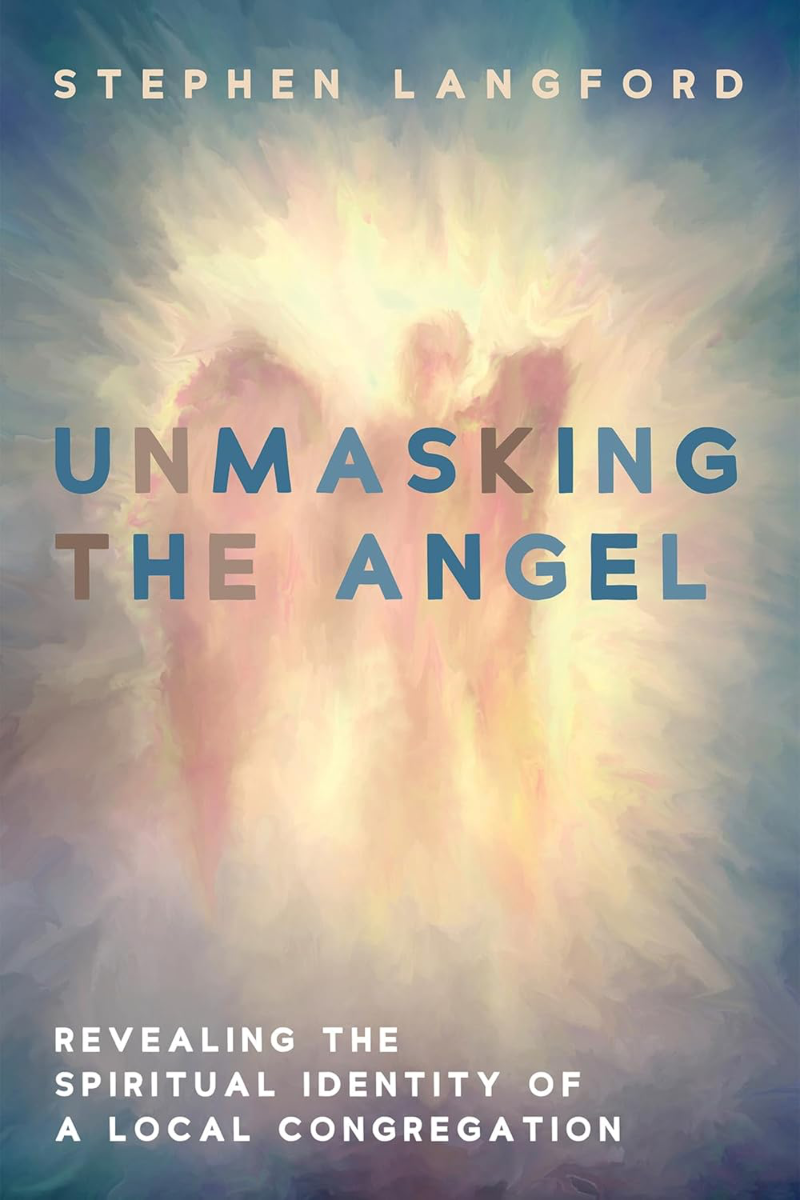 Unmasking the Angel: Revealing the Spiritual Identity of a Local Congregation
By the Revd Dr Stephen Langford
Wipf & Stock
ISBN: 978-1-6667-4301-2
Reviewer: Meghan L Byerly
Langford’s book, a reworking of his Doctoral thesis, is a rich and thoughtful resource for anyone in our Baptist family. Whether you are a minister, regional minister, lay leader, or a member of a church, this book has plenty of information regarding prayerfully considering the personality of churches. Especially how our churches experience change.
Langford’s book applies the theory of a church angel, developed by the late Walter Wink, to three Baptist churches in West England. Wink claims that the angel of the church is a ‘transcendent entity that exists separately and yet is inseparable from the church (Langford 3).’ It ‘represents the interiority of an organization (Langford 219),’ and so it encapsulates the history, traditions, and habits of a church.
Furthermore, the angel’s personality is resilient, and so while it can promote necessary change in a church it is also capable of resisting necessary change in a church (Langford 219). Just like any organism, the angel does not exist in a vacuum, unaffected by the changes of history and culture. And so, just as we all are faced with changes, so is the angel of a church. However, this angelic entity cannot be changed ‘unless the way the earthly congregation functions is also transformed (Langford 220).’
Even if the reader takes issue with or disagrees with Wink’s claim that there is an angel of a church and it is tied to the life of the congregation, Langford’s book is an invaluable source of wisdom concerning how a congregation might change for the better or even for the worse. Langford takes the six facets of a church’s angel that Wink discusses, and uses them to explore three church’s written histories (church meeting minutes, deacons’ meeting minutes, letters to the congregation, published histories, etc).
As he goes about this work, Langford both fills the gaps of and enriches the facets Wink provides through using the academic disciplines of geography, history, sociology and psychology. The result is a significant book that considers how changing a church can be informed by its architecture and ambience, demographics, authority/power structure, handling of conflict, self-understanding, and its denominational rubrics, theology and worship (these last three all in one chapter/facet).
Again, the worth of this book should not be overlooked by our Baptist family. Many of us know of stories where churches appropriately handled change and so were able to step into the blessings of their next, God-given chapter. Yet many more of us might remember stories of churches who inappropriately or even refused to handle the changes they faced, and so either limped into their next chapter, died, or even (as Wink and Langford suggest) experienced their angel shifting toward the demonic.
Regardless of where you and your church are in its life cycle, reading Langford’s thesis will enrich the understanding of your church(es).
The Revd Dr Meghan L Byerly is an Accredited Baptist minister in Sheffield, South Yorkshire. She has just finished her PhD work through Luther King House Educational Trust and the University of Manchester
Baptist Times, 17/04/2026