Cracking the code of the unicorn
Theologian Paul Fiddes ventures into fiction for the first time, and the result is both gripping and complex
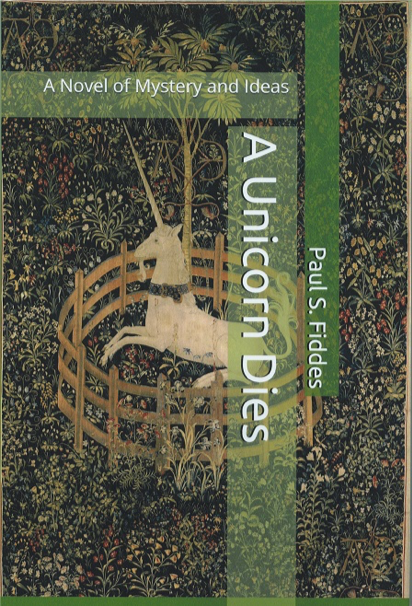 A Unicorn Dies - A Novel of Mystery and Ideas
By Paul Fiddes
Oxford: Firedint Publishing, 2018
ISBN 978-1-9999407-2-0
Reviewed by Hugh Whittaker
Written by Baptist Professor of Theology, Paul S. Fiddes, this is the first novel to reflect the modern cultural preoccupation with the image of the unicorn.
Giles Questing, an undergraduate student at the University of Oxford, is learning about the myths and symbols connected with the unicorn. He gets involved with the suspicious death of another student, and sets out to try and solve the mystery by following a trail of artworks which depict the unicorn. Travelling to museums and galleries, he gradually discovers the truth about whether the student has taken his own life or been murdered and who – if anyone – is guilty.
His quest immerses him into the world of the unicorn in medieval and Renaissance art, and introduces him to the present-day obsession with the unicorn in the media, advertising and social networks. All this enables him to crack the code of the unicorn which has been buried in the tradition of the Christian church through many years, and to answer the questions he has about a death which deeply affects him personally and which finally threatens his own life.
The book bears a passing resemblance to a Dan Brown novel. There is a murder, a code to be cracked, galleries, museums and churches which offer clues to the mystery in far flung places, with an unseen but lurking menace waiting to claim further victims, including Giles himself.
Tension is high. At stake, however, is not a dark secret ‘the church’ is anxious to hide, or simply solving a mysterious death, but an understanding of the mysterious unicorn, its place in medieval art, literature and the symbolic communication of ideas, and the recent ‘rediscovery’ of the unicorn and its appropriation for a range of non-religious causes and virtual world avatars.
The author is out to do three things. In addition to entertaining us, he also wants to educate us, and to challenge us. Through Giles we become acquainted with an Oxford don’s college quarters, the tutorial system, and the pubs Tolkein and Lewis held their meetings in. We are reminded of the seven Christian virtues through the relief statues of the arches of St Peter’s Basilica, and that the quest for immortality is at least as old as graffiti on the seats of the Colosseum in Rome. We find out about a virtual world few of us have entered. And we discover that the unicorn was imbued with diverse, contradictory and controversial meanings.
The quest is more than entertainment and education, though. Giles is on a journey of self-discovery which takes him through various states towards a deeper understanding of the mysteries of life that one discovers through Christian traditions. Here the author points to the importance of art and literature, as well as raw life, in nurturing that understanding. The unicorn is brilliantly chosen to lead us through these woods.
A Unicorn Dies operates on several levels. It is both gripping and complex. I very much enjoyed this quest with Giles, and look forward to the next novel. It won’t be an easy act to follow.
Professor Hugh Whittaker is the Director of the Nissan Institute of Japanese Studies, University of Oxford
Baptist Times, 23/03/2018