Unforgiveable? by Stephen Cherry
'Explores forgiving and forgivability in the aftermath of serious, traumatic and life-changing harm. An important book, which deserves serious study'
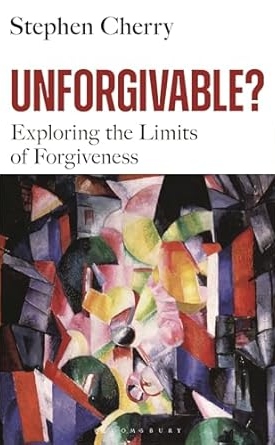 Unforgiveable?
By Stephen Cherry
Bloomsbury Continuum
ISBN 978-1-3994-0132-6
Reviewed by John Matthews
Sub-titled ‘Exploring the limits of forgiveness’, this book, comes with a ‘Contents Warning’ which explains that it is about forgiving and forgivability in the aftermath of serious, traumatic and life-changing harm, and discusses some of the most disturbing and distressing experiences, including rape, torture, murder and genocide, sometimes using language which some may find offensive.
Rather than a philosophical analysis of forgiveness or a ‘how to forgive’ manual, Cherry seeks to give a humane account of forgiveness and its limits, paying particular attention to the reality and needs of the harmed, the wider needs of society, those with connections to victims and survivors, as well as the perpetrators of wrongdoing and harm. Most importantly, says the author, it is an attempt not to perpetuate what he sees as various mistakes in the way Christianity has often approached and promoted forgiveness.
The approach is to raise issues by way of imaginary letters written to him, to which he responds at the end of the book, as well as drawing on a number of real life situations including those of Fr Michael Lapsley, who lost limbs due to a letter bomb exploding, and the Revd Mina Smallman, whose daughters were murdered. Surprisingly, he does not mention the Revd Julie Nicholson, a vicar who resigned her living because she could not forgive the person who killed her daughter by exploding a bomb on a London bus in 2005.
Cherry recognises that the question of whether or not to forgive someone who has done serious harm can be complicated and what is right in one situation may not be right in another. The needs of the victim/survivor must always take precedence of those of the perpetrator. He articulates three kinds of forgiveness; private forgiveness, gift forgiveness and responsive forgiveness.
He does not believe that Jesus states that we should offer absolute, unconditional, forgiveness in all circumstances and points that that in John 21 he gives his disciples authority to forgive sins or not to. With reference to the parable of the unforgiving servant in Matthew 18, he suggests that being released from a debt is different to being forgiven after inflicting grievous harm. And he points out that Jesus’ words on the cross, ‘Father, forgive them...’ are a prayer for God to forgive, not an expression of Jesus’ forgiveness.
Cherry believes that we should not only encourage people to be forgiving but also to be honest when they can’t forgive. ‘To do this involves identifying, enlarging and populating the space between vengeance and hatred on the one side and forgiveness on the other.’
With regard to the question mark in the title, Cherry believes that ‘if an abuser does the right thing by the victim, then they move away from being unforgiveable. If they don’t – they don’t.’
There is much else, not least the question of repentance, in this important book, which deserves serious study. Its usefulness would have been enhanced by a bibliography, an index of names and subjects, and one of biblical references.
John Matthews is a retired Baptist minister living in Rushden, Northants
Baptist Times, 06/09/2024