Human Trafficking, the Bible and the Church
Valuable piece of work offering a rigorous overview of the themes of slavery and prostitution within the Bible, and exploring a church response
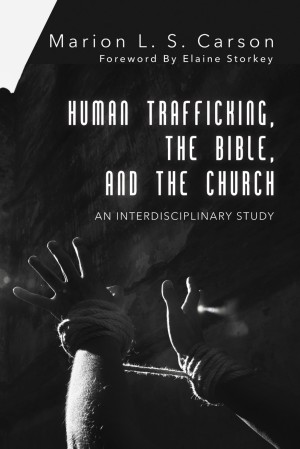 Human Trafficking, the Bible and the Church
By Marion L.S Carson
SCM, 2017
ISBN: 978-1498219310
Reviewed by Dan Pratt
Human Trafficking, the Bible and the Church is a timely piece of scholarly research addressing one of the most pressing matters of injustice within our world today, that of modern slavery and human trafficking. With more than 13,000 people estimated to be kept in modern slavery in the UK today, there is a pressing need for the British Church to learn about and respond to this injustice.
Carson is the Secretary of the European Baptist Federation Anti-trafficking Network, and her book is remarkably similar to her previous work Setting the Captives Free, with both addressing the same questions and subject matter. Rather than being a resource and workbook for churches to wrestle with the issue of human trafficking (as was Setting the Captives Free), Human Trafficking the Bible and the Church offers greater depth and academic rigour.
The book ‘ask[s] what the Bible has to say about contemporary human trafficking.’ This is done through addressing two questions. The first question asks, 'what does the Bible say about slavery in general’ and ‘how can it inform a Christian response to modern-day trafficking of persons?’ What follows is a biblical and historic overview concerning slavery and prostitution.
Like Setting the Captives Free, Carson addresses the difficult hermeneutical questions of why within the Bible ‘slavery is accepted as the norm, and nowhere is there a direct prohibition against it’.
For Carson, these difficult Biblical texts are outweighed by the ‘Golden Rule’. This ‘law of love’ is noted as being first implemented by the Quakers in the 1700s, but ‘became the hermeneutical key for the antislavery campaign as a whole’. Through this hermeneutical lens, the book offers a rigorous helpful overview of the Bible and slavery.
Taking key Old and New Testament texts Carson gives a helpful overview of these issues relating to their historical and cultural Biblical contexts. Indeed, this ‘law of love’ hermeneutic would be helpful when relating to other contexts of oppression. Carson concludes that ‘while it is true that slavery is never denounced or prohibited, the overarching message of Scripture is one of redemption’.
As within Setting the Captives Free, there is perhaps a lack of critical response to the Biblical texts. There is no major critique that the Bible does not condemn slavery, but is rather complicit in it. Carson’s hermeneutical approach is therefore accepting of the Biblical text rather than questioning if it could be viewed as an oppressive text.
The book gives particular consideration to a subset of modern slavery, sex trafficking. What follows is a helpful overview of the complexities of the ‘problem of prostitution’.
The second main question of the book asks ‘how should Christians respond to this, and how can the Bible help them to do so?’ Carson encourages a response beyond ‘simplistic preconceived ideas about prostitution.’ Rather the Bible should inform Christians to work towards ‘justice, dignity and freedom that are at the heart of the canonical vision for God’s people.’
In summary, Human Trafficking, the Bible and the Church, offers a rigorous overview of the themes of slavery and prostitution within the Bible, as well as exploring how the church responded to these issues in the eighteenth and nineteenth centuries. This overview provides a good theological foundation on which the church can increasingly respond to the injustice of human trafficking. The book is a valuable piece of work and a gift that each church should be encouraged to interact with.
Dan Pratt is the pastor of 57 West, Southend-on-Sea.
This review was originally published in Regent’s Reviews, based at Regent’s Park College, Oxford. Regent’s Reviews is published every April and October.This review is republished with permission.
Baptist Times, 17/10/2017